









While work can be fulfilling for many, burnout and workplace stress contribute to physical and mental health problems. But, while there are many other causes of bad mental health, employers and line managers need to have suicide prevention strategies in place to promote the good mental health of their employees.
However, suicide prevention policies cannot be expected to prevent all suicides. Unfortunately, suicides may still occur. As a result, it is essential that organisations have effective management strategies in place that will guide employees and employers through such a difficult time.
Suicide can have a major impact on organisations and their employees. Offering workplace care is vital to ensure that the everyday activities of the organisation can continue, whilst ensuring that its employees are supported throughout their grieving process.
What are the main causes of suicide?
Workplace stress has been reported as a leading cause of suicide in many counties. Workplace stress is caused by factors such as long hours, pressing deadlines, and a lack of wellbeing support.
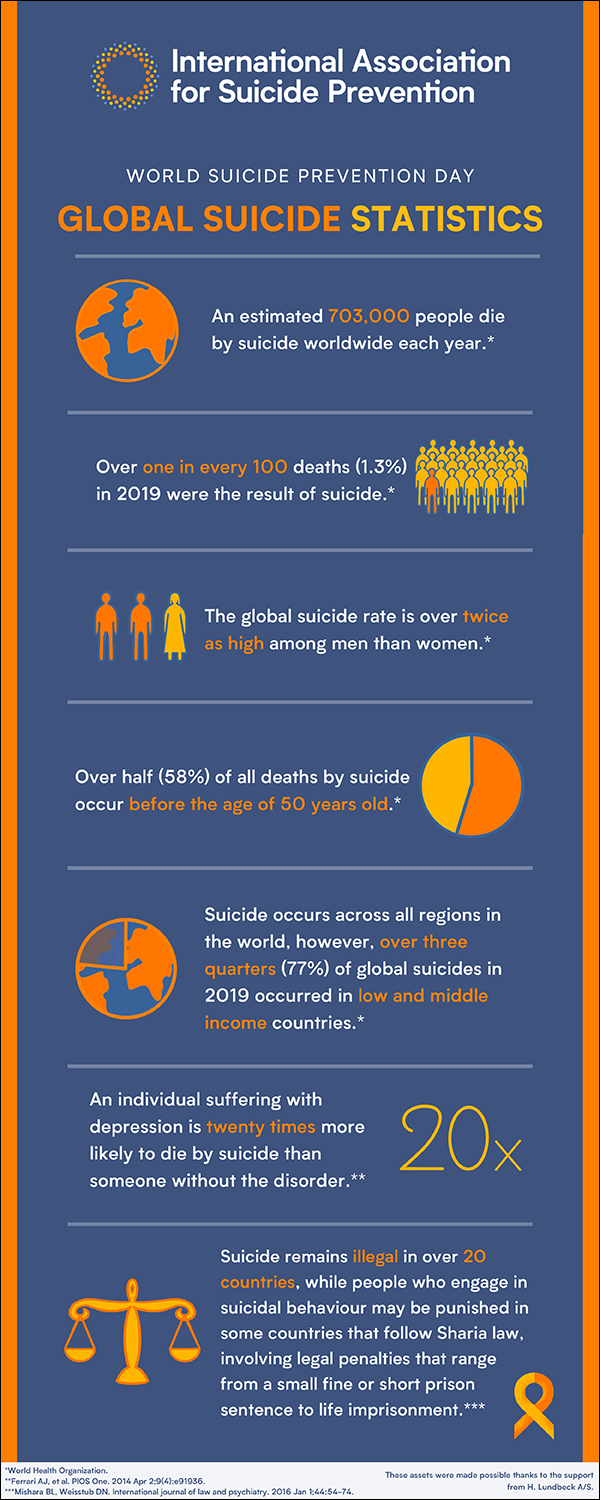
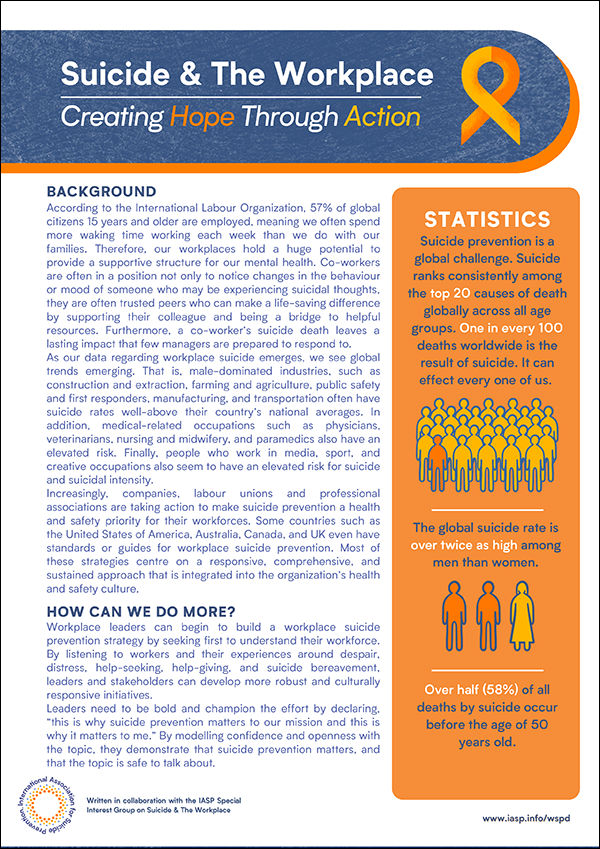
According to 1995 and 2005 research by the World Health Organisation (WHO), the vast majority of suicides occur amongst the working age population. Whilst this does not necessarily suggest that workplace stress is the primary motivating factor behind suicides, it nonetheless demonstrates the need for workplace suicide prevention strategies.
In addition, a survey by Mind found that work is the most stressful factor in people’s lives with one in three people (34%) saying their work life was either very or quite stressful, more so than debt or financial problems (30%) or health (17%).
A report by the Samaratins, titled ‘Inequality and Suicide’ highlghts that those living in verry disadvantaged communities have the highest risk of suicide. The report highlights that zero-hour job contracts that cause job insecurity are major causes of suicide.
The Trades Union Congress (TUC) also highlights the link between workplace stress and suicide.
They highlight that in 2017, the government released “figures that showed that there was a strong link between suicide and occupation. Low skilled male labourers are three times more likely to take their own lives than the national average. Other groups with an increased risk are nursing staff, primary teachers and agricultural workers.”
Other causes of suicide
However, there are a wide variety of other possible causes. For example, WHO lists that individuals “experiencing conflict, disaster, violence, abuse, or loss and a sense of isolation are strongly associated with suicidal behaviour.”
WHO also states that suicide rates are “high amongst vulnerable groups who experience discrimination, such as refugees and migrants; indigenous peoples; lesbian, gay, bisexual, transgender, intersex (LGBTI) persons; and prisoners. By far the strongest risk factor for suicide is a previous suicide attempt.”
It may also be the case that a combination of causes are responsible.
What should an employer do if an employee tells them they are suicidal?
Creating a positive and supportive culture for mental wellbeing within the workplace is essential. Employees should be encouraged to speak openly about their mental health, and made to feel that if they were to reach out, support would be waiting for them.
However, this also means that managers need to be well trained in how to offer support to a suicidal employee.
One method that an employer may offer help, is by following HSE’s Management Standards approach. This helps to highlight the main causes of stress within the workplace.
The role of managers
A guide by WHO suggests that managers “provide information sessions for your staff on mental health and suicide prevention [and] ensure all staff know what resources are available for support, both within the organisation and in the local community.
In addition, managers should “design and implement a plan for how to sensitively manage and communicate the suicide or suicide attempt of an employee in a way that minimises further distress. Measures should include the availability of trained health workers and support services for staff.”
The employer’s Duty of Care: why is suicide a workplace issue?
An employer has certain legal duties surrounding caring for their employees. For example, an employer has a legal responsibility to assess the health risks surrounding the stress of the employee.
The TUC states that this “means that employers must address any issues that may cause a worker to have suicidal thoughts, including workload, stress, bullying etc.”
The profound role of employers
The roles of employers and line managers are profound. Having an appropriate response will determine the way in which the affected employees can either come to terms with a loss of a colleague, or determine how a suicidal employee receives the correct help.
A report by the CIPD highlights the importance of training and support for managers, due to the fact that the burden of responsibility for implementing the suicide prevention policies falls onto them.
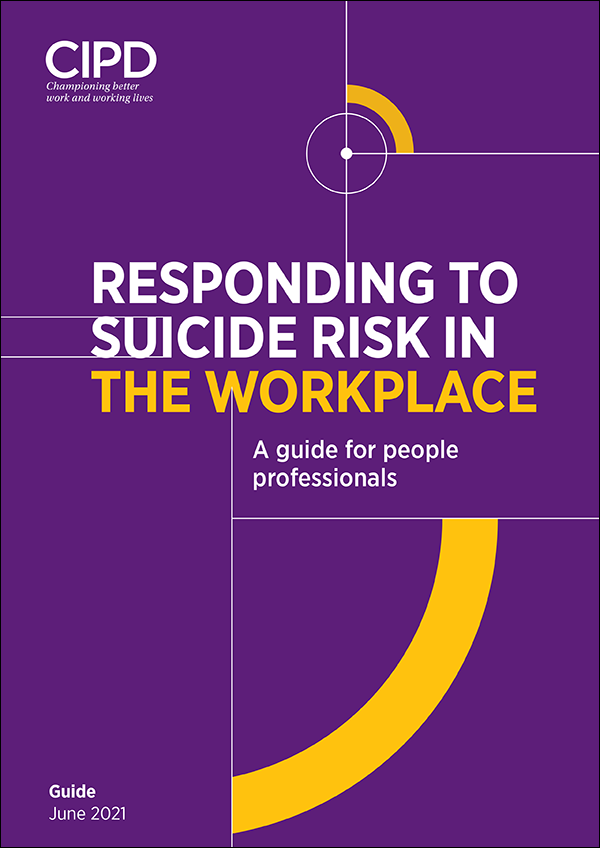
The report, entitled ‘Responding to Suicide Risk in the Workplace’, suggests that employers “should ensure that all people managers are trained and have a broad understanding of the important factors relating to mental health and suicide, and how to spot changes in employee behaviour that could signal potential warning signs of distress, including suicide risk.”
However, the report also stresses that managers are not usually qualified counsellors, and therefore they have no right to give diagnosis’ out.
Top tips on how to spot if a colleague or employee may be suicidal
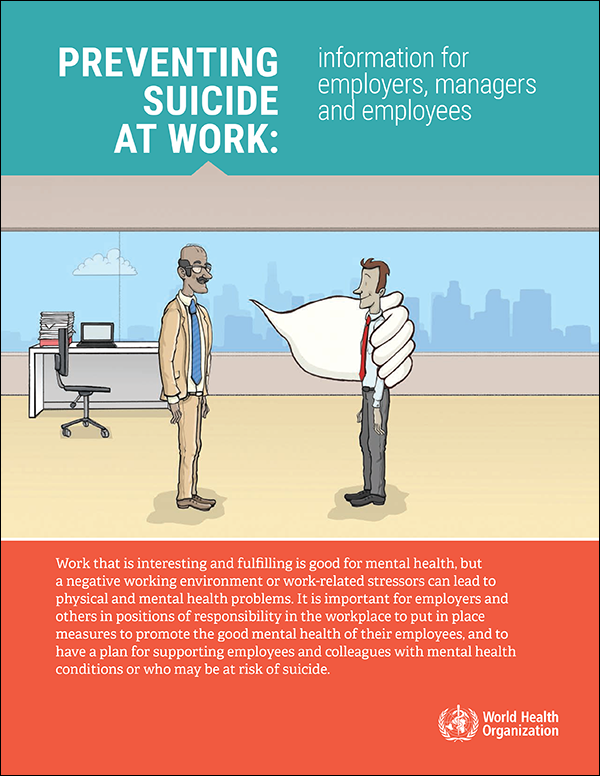
In a report by WHO titled ‘Preventing Suicide at Work,’ there are eight major signs to look out for of a suicidal employee. These include:
- Expression of thoughts or feelings about wanting to end their life, or talking about feeling hopeless or having no reason to live.
- Expression of feelings of isolation, loneliness, hopelessness or loss of self-esteem, or dwelling on problems.
- Withdrawal from colleagues, decrease in work performance or difficulty completing tasks.
- Changes in behaviour, such as restlessness, irritability, impulsivity, recklessness or aggression.
- Speaking about arranging end-of-life personal affairs such as making a will, or concrete plans for suicide.
- Abuse of alcohol or other substances.
- Depressed mood or mentioning of previous suicidal behaviour
- Bullying and/or harassment.
WHO also suggests that particular attention should be paid to people who are losing their job.
What responsibilities do employees have to notify the employer how they feel?
Whilst employers have legal responsibilities to ensure a healthy and safe workspace, employees also have a responsibility to take reasonable care of their own health and safety.
However, as Mind outlines, employees might not discuss their mental health issues with their employer because they are worried about confidentiality or how they may be treated.
What happens if an employee commits suicide on work premises?
In the case that death by suicide occurs in the workplace, it is the role of the manager to restrict the panic amongst other employees.
Once the death has been noticed, the police should immediately be called, and the incident reported.
The police will treat any case of unexplained deaths as a crime scene. Until the police arrive, any unauthorised people should be kept away from the area.
From as early as possible, it is also important to consider the ways in which you will offer support to your employees.
This is especially the case for those employees who may have found the body, or, for example, a suicide note. It should also be understood that the effects of the suicide may have long-lasting impacts on your employees for months or even years.
How to help an employee who survives a suicide attempt
Feeling of isolation, guilt, embarrassment and loneliness are common feelings of those employees returning to work after attempting suicide.
Offering your employees a structured returning to work plan which contains set objectives, aims and goals, is crucial.
HeadsUp suggest that when this plan is being developed, the following questions should be asked:
- How are they feeling about work?
- What might prevent them from remaining at or returning to work?
- What adjustments or changes would support their recovery?
- What sorts of strategies would help them cope with issues at work?
- If they have had some time off, when might they be ready to return to work?
- If they need some time off work, how would they like you to keep in touch with them, e.g. weekly by phone, text or email?
- Is it OK to speak to the employee’s health professionals about their recovery and readiness for work?
Alongside this, offering reasonable adjustments is also recommended. The Disability Discrimination Act (1992) is a federal anti-discrimination legislation “that makes it unlawful to discriminate in employment: On the grounds of a person’s disability.”
In other words, employers have a legal duty to make reasonable adjustments to support people with mental disabilities providing that the employee is able to fulfil the requirements of their role.
How to help co-workers if an employee commits suicide
Suicide postvention
The responsibility of the employer does not just cover suicidal employees, but also extends do all of those who are affected after an employee takes their own life. This is what the term ‘suicide postvention’ refers to.
As the CIPD states, “every employer needs to be prepared to respond very quickly to a suicide death and to give support to employees.”
The importance of this is demonstrated by a government study into support after suicide, which found that those bereaved by suicide were 80 percent more likely to drop out of education or work.
‘Suicide postvention’ refers to the actions taken to support the community after somebody else commits suicide. It is crucial for organisations to offer this support, and it is a critical part of preventing any further suicides.
External chat helplines
Making your employees aware of external chat helplines is also very important. A comprehensive list is offered by Mind:
- Samaritans. To talk about anything that is upsetting you, you can contact Samaritans 24 hours a day, 365 days a year. You can call 116 123 (free from any phone), email jo@samaritans.org or visit some branches in person. You can also call the Samaritans Welsh Language Line on 0808 164 0123 (7pm–11pm every day).
- SANEline. If you’re experiencing a mental health problem or supporting someone else, you can call SANEline on 0300 304 7000 (4.30pm–10.30pm every day).
- National Suicide Prevention Helpline UK. Offers a supportive listening service to anyone with thoughts of suicide. You can call the National Suicide Prevention Helpline UK on 0800 689 5652 (open 24/7).
- Campaign Against Living Miserably (CALM). You can call the CALM on 0800 58 58 58 (5pm–midnight every day) if you are struggling and need to talk. Or if you prefer not to speak on the phone, you could try the CALM webchat service.
- Shout. If you would prefer not to talk but want some mental health support, you could text SHOUT to 85258. Shout offers a confidential 24/7 text service providing support if you are in crisis and need immediate help.
- The Mix. If you’re under 25, you can call The Mix on 0808 808 4994(3pm–midnight every day), request support by email using this form on The Mix website or use their crisis text messenger service.
- Papyrus HOPELINEUK. If you’re under 35 and struggling with suicidal feelings, or concerned about a young person who might be struggling, you can call Papyrus HOPELINEUK on 0800 068 4141 (weekdays 10am-10pm, weekends 2pm-10pm and bank holidays 2pm–10pm), email pat@papyrus-uk.org or text 07786 209 697.
- Switchboard. If you identify as gay, lesbian, bisexual or transgender, you can call Switchboard on 0300 330 0630 (10am–10pm every day), email chris@switchboard.lgbt or use their webchat service. Phone operators all identify as LGBT+.
- C.A.L.L. If you live in Wales, you can call the Community Advice and Listening Line (C.A.L.L.) on 0800 132 737 (open 24/7) or you can text ‘help’ followed by a question to 81066.
- Helplines Partnership. For more options, visit the Helplines Partnershipwebsite for a directory of UK helplines. Mind’s Infoline can also help you find services that can support you. If you’re outside the UK, the Befrienders Worldwide website has a tool to search by country for emotional support helplines around the world.
Run a Campaign
World Suicide Prevention Day is on 10th September 2022 – you can find out how to paticipate here.
Further Reading
- Health & Safety Executive – Suicide Prevention Advice
- White Swan Foundation – Coping with the suicide of an employee
- TUC – Work and Suicide