



High workplace stress is pushing more British employees to smoke, with many turning to cigarettes as a coping mechanism, a new study suggests.
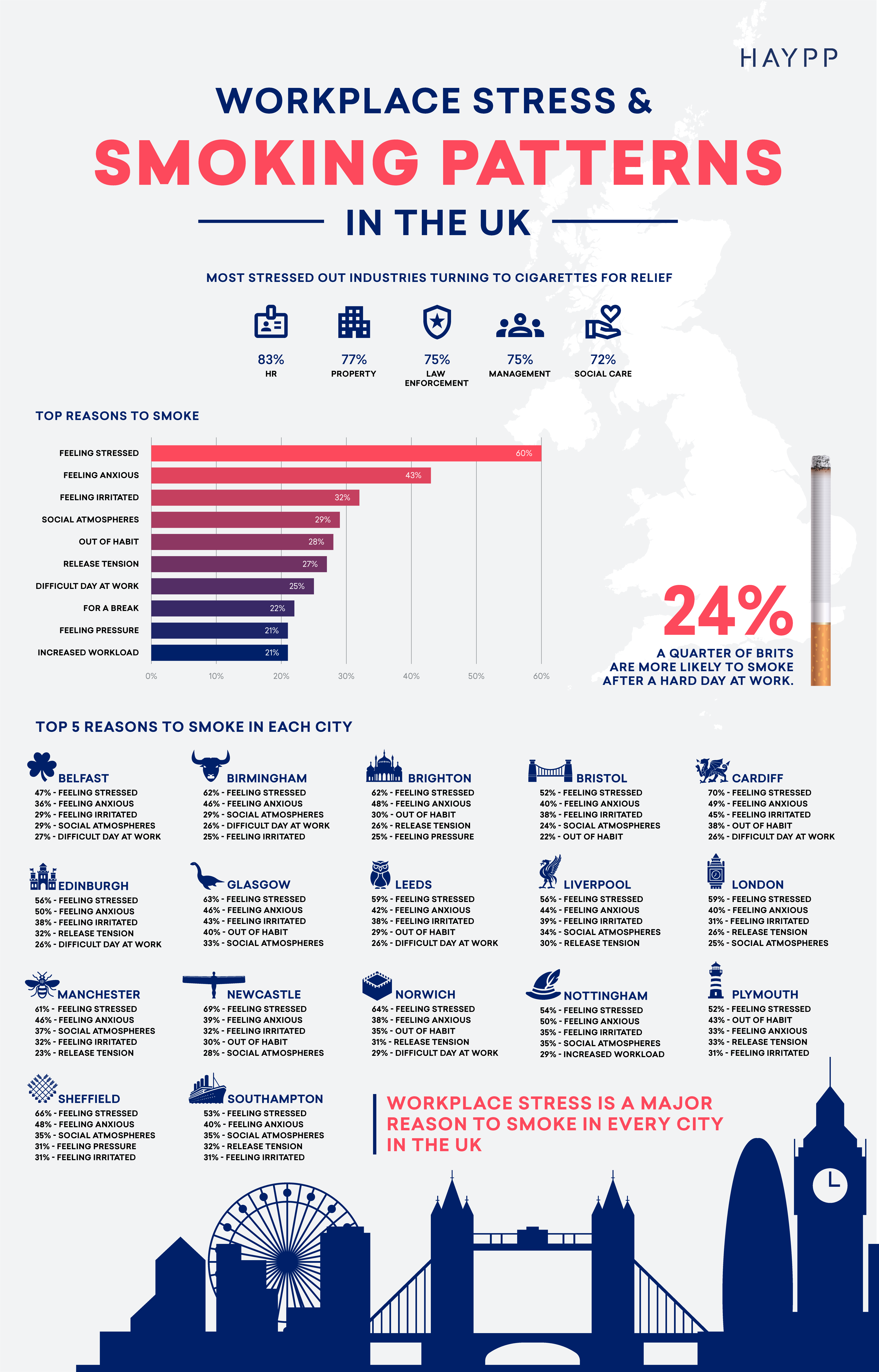
More than half of workers (60%) identified stress as the main factor influencing their smoking habits, while 40% admitted to smoking more during particularly stressful workdays, the study, by vaping retailer Haypp, says.
The findings highlight a concerning link between workplace pressures and increased tobacco use, with many employees struggling to manage their mental wellbeing without resorting to cigarettes. Anxiety was another major trigger, with 43% of respondents saying they smoked to cope with anxious thoughts.
Industries Most Affected
Some sectors are particularly vulnerable to stress-induced smoking. The highest rates were recorded in:
- Real estate: 55% of workers in the property sector smoke daily, with 40% linking increased workloads to higher cigarette consumption.
- Construction: 48% smoke regularly, and 65% say they do so as a direct response to workplace stress.
- Social care: 47% of workers in this emotionally demanding field report regular smoking habits.
- Hospitality: 44% of hospitality workers smoke, with 62% citing stress as the main cause.
- Management: 44% of managers are regular smokers, and 75% say stress from leadership responsibilities has increased their smoking levels.

The Role of Workplace Culture
Beyond stress, other workplace factors contribute to smoking habits. A third (33%) of respondents said they smoked more when feeling irritated by colleagues or workplace conflicts. Nearly a third (29%) said social pressures in the workplace encouraged them to smoke, while 27% admitted to smoking simply out of habit.
The data suggests that some employees view smoking as one of the few accessible stress relievers during the workday, particularly in industries where long hours, tight deadlines, and high-pressure environments are common.
A Call for Better Wellbeing Support
With workplace stress linked to increased smoking rates, there is growing pressure on employers to provide stronger mental health support. Experts argue that businesses must do more to help employees manage stress in healthier ways, such as providing access to mental health resources, promoting regular breaks and creating smoke-free wellbeing initiatives.
Encouraging the use of tobacco-free alternatives, offering stress management workshops and fostering a supportive workplace culture could help reduce the reliance on cigarettes as a coping mechanism, say experts. Without meaningful intervention, many workers may continue to turn to smoking as a short-term solution to long-term workplace pressures.