

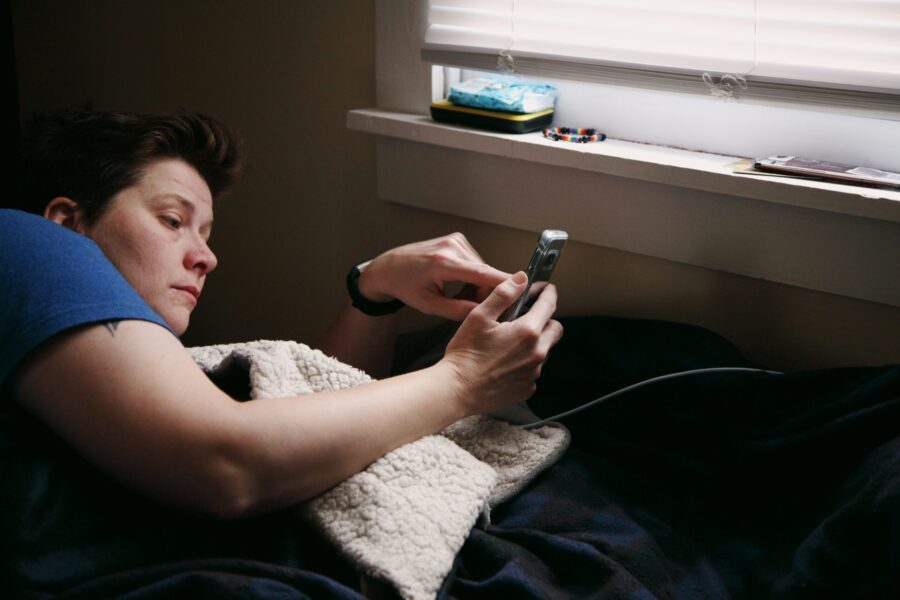
‘Revenge Bedtime Procrastination’ is sacrificing sleep to regain leisure time that can’t be fitted into a busy daily schedule.
Whether that be simply scrolling, getting your nose stuck into a good book, or catching up with your favourite Netflix series, revenge bedtime procrastination can wreak havoc on your health.
With this in mind, Mattress Online‘s sleep expert, James Wilson – known as ‘The Sleep Geek’ – provided insight on how to whip your sleep schedule back into shape after indulging in the phenomenon.
How will persistent ‘revenge bedtime procrastination’ affect my health?
With altered schedules and shifted circadian rhythms, sleep procrastinators see a disruption to the body’s natural sleep patterns, exacerbating the effects of ‘jet lag’, which can impair people’s moods and mental capacities upon returning to work.
So, just like with jet lag from travelling across time zones, it can take several days to recover from the negative effects of sleep loss. This can result in poor sleep quality, difficulty falling asleep or waking up at our usual time, and feelings of fatigue and grogginess during the day.
Whilst it may take some time for the body to readjust to its normal sleep-wake cycle once you break the habit, regular and consistent sleep deprivation increases the risk of diabetes, hypertension, heart disease, and stroke, so make sure to stick to a set schedule as much as possible.
The Centers for Disease Control and Prevention recommends at least seven hours of sleep per night.
How to get your sleep routine back to normal:
Limit light exposure at night: Keep your bedroom cool, dark, and quiet. Longer daylight hours as we head into summer means more exposure to natural light in the evenings, which can suppress the production of melatonin, the hormone that regulates sleep, making it more difficult to fall asleep.
Limit exposure to artificial light sources, such as smartphones, tablets, and computers at least an hour before bedtime. Dim the lights in your home in the evening to signal to your body that it’s time to wind down, and consider investing in blackout curtains to block out external light sources in your bedroom.
Don’t give in to the lie in: Your body may demand more sleep to make up for the deficit and you might find yourself wanting to sleep in, which is your body’s way of trying to repay the sleep debt. Try to keep your sleep schedule consistent, and wake up at the time you usually do.
Taking a short power nap, preferably before 2pm and for less than 30 minutes, will allow your body and mind to rest and rejuvenate.
Some people also take magnesium, some might drink a glass of water before bed, which can be helpful as it helps rehydration, although this may cause you to need the toilet more in the night, and some people might try a drink with added electrolytes, such as coconut water.

Joanne is the editor for Workplace Wellbeing Professional and has a keen interest in promoting the safety and wellbeing of the global workforce. After earning a bachelor's degree in English literature and media studies, she taught English in China and Vietnam for two years. Before joining Work Well Pro, Joanne worked as a marketing coordinator for luxury property, where her responsibilities included blog writing, photography, and video creation.
- Joanne Swann
- Joanne Swann
- Joanne Swann
- Joanne Swann
- Joanne Swann
- Joanne Swann
- Joanne Swann
- Joanne Swann
- Joanne Swann
- Joanne Swann
- Joanne Swann
- Joanne Swann
- Joanne Swann
- Joanne Swann
- Joanne Swann
- Joanne Swann
- Joanne Swann
- Joanne Swann
- Joanne Swann
- Joanne Swann
- Joanne Swann
- Joanne Swann
- Joanne Swann
- Joanne Swann
- Joanne Swann
- Joanne Swann
- Joanne Swann
- Joanne Swann
- Joanne Swann
- Joanne Swann
- Joanne Swann
- Joanne Swann
- Joanne Swann
- Joanne Swann
- Joanne Swann
- Joanne Swann
- Joanne Swann
- Joanne Swann
- Joanne Swann
- Joanne Swann
- Joanne Swann
- Joanne Swann
- Joanne Swann
- Joanne Swann
- Joanne Swann
- Joanne Swann
- Joanne Swann
- Joanne Swann
- Joanne Swann
- Joanne Swann
- Joanne Swann
- Joanne Swann
- Joanne Swann
- Joanne Swann
- Joanne Swann
- Joanne Swann
- Joanne Swann
- Joanne Swann
- Joanne Swann
- Joanne Swann
- Joanne Swann
- Joanne Swann
- Joanne Swann
- Joanne Swann
- Joanne Swann
- Joanne Swann
- Joanne Swann
- Joanne Swann
- Joanne Swann
- Joanne Swann
- Joanne Swann
- Joanne Swann
- Joanne Swann
- Joanne Swann
- Joanne Swann
- Joanne Swann
- Joanne Swann
- Joanne Swann
- Joanne Swann
- Joanne Swann
- Joanne Swann
- Joanne Swann
- Joanne Swann
- Joanne Swann
- Joanne Swann
- Joanne Swann
- Joanne Swann
- Joanne Swann
- Joanne Swann
- Joanne Swann
- Joanne Swann
- Joanne Swann
- Joanne Swann
- Joanne Swann
- Joanne Swann
- Joanne Swann
- Joanne Swann
- Joanne Swann
- Joanne Swann
- Joanne Swann
- Joanne Swann
- Joanne Swann
- Joanne Swann
- Joanne Swann
- Joanne Swann
- Joanne Swann
- Joanne Swann
- Joanne Swann
- Joanne Swann
- Joanne Swann
- Joanne Swann
- Joanne Swann
- Joanne Swann
- Joanne Swann
- Joanne Swann
- Joanne Swann
- Joanne Swann
- Joanne Swann
- Joanne Swann
- Joanne Swann
- Joanne Swann
- Joanne Swann
- Joanne Swann
- Joanne Swann
- Joanne Swann
- Joanne Swann
- Joanne Swann
- Joanne Swann
- Joanne Swann
- Joanne Swann
- Joanne Swann
- Joanne Swann
- Joanne Swann
- Joanne Swann
- Joanne Swann
- Joanne Swann
- Joanne Swann
- Joanne Swann
- Joanne Swann
- Joanne Swann
- Joanne Swann
- Joanne Swann
- Joanne Swann
- Joanne Swann
- Joanne Swann
- Joanne Swann
- Joanne Swann
- Joanne Swann
- Joanne Swann
- Joanne Swann
- Joanne Swann
- Joanne Swann
- Joanne Swann
- Joanne Swann
- Joanne Swann
- Joanne Swann
- Joanne Swann
- Joanne Swann
- Joanne Swann
- Joanne Swann
- Joanne Swann
- Joanne Swann
- Joanne Swann
- Joanne Swann
- Joanne Swann
- Joanne Swann
- Joanne Swann
- Joanne Swann
- Joanne Swann
- Joanne Swann
- Joanne Swann
- Joanne Swann
- Joanne Swann
- Joanne Swann
- Joanne Swann
- Joanne Swann
- Joanne Swann
- Joanne Swann
- Joanne Swann
- Joanne Swann