KOA Health – mental health solutions evidence base and trustworthiness

Free Mental Health Solutions Pocket Guide
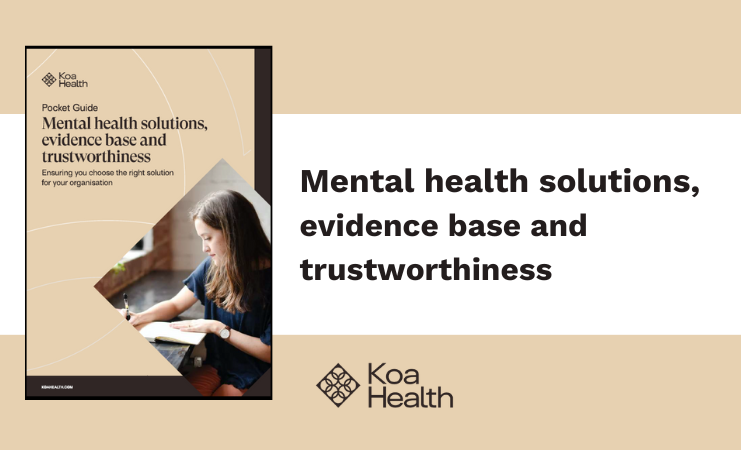
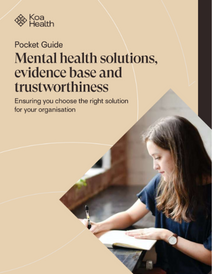
The pocket guide to mental health solutions – download the free white paper below.

Most digital-first mental health solutions claim to be evidence-based, but a comparatively tiny percentage have a foundation of strong science.

Although research published in the Lancet1 demonstrates that digital interventions do have the potential to effectively diminish the symptoms of mental conditions (such as depression), it’s estimated that less than 3% of solutions available on the market have the evidence to back them up2. This makes it hard for employers and their employees to entrust these providers with their wellbeing, not to mention their private data.

So how can busy wellbeing professionals committed to prioritising employee wellbeing and building organisational resilience ensure the solutions they’re using (or plan to use) have a solid evidence base? How can they find tools that are as trustworthy as they are effective?

Get your free Mental Health Solutions Pocket Guide

Ensuring you choose the right solution for your organisation.

Simply complete the form below to get your free copy now!


"*" indicates required fields

Name*

Agreement to receive emails

Please tick the boxes below to download the eBook - you can also opt in to receive emails from Work Well Pro.
1.*
2.

Share

Latest News

Latest Analysis

Related Articles

Dan Kentley: Supporting Neurodivergent Employees In the Workplace

It’s estimated that one in seven people in the UK are neurodivergent, meaning they may learn or process information differently to those who are neurotypical.

Autism Tribunal Claims Rise By 25% As Employers Face Growing Workplace Duties

Tribunal claims relating to autism rose by 25% in 2025, marking the sharpest increase in at least five years, according to new analysis.

Jenny Lucas: Why Neurodivergent Burnout Is a Workplace Wellbeing Issue – Not a Resilience Problem

Traditional burnout frameworks often focus on excessive workload or insufficient recovery time. In neurodivergent burnout, the picture can be more complex.

Hybrid Work and Menopause Raise Concerns Over Women’s Bone Health

Women can lose up to 2% of bone density per year during the menopausal transition due to a rapid drop in oestrogen levels.