

Searches for the “best position to sleep in” have soared by 250% over the past month, as research confirms that poor sleep can chip away at your physical and mental wellbeing, affecting productivity and cognitive abilities. But did you know there’s ONE sleeping position that’s especially popular among successful high earners?
The sleep experts at Bed Slats have surveyed 5,438 working professionals to reveal whether sleeping positions can influence one’s success and earnings. Teaming up with celebrity psychic and body language expert Inbaal Honigman, they’ve also uncovered the secrets of the nation’s most-loved sleep positions.
The UK’s most popular sleep positions revealed
The fetal position tops the list as the UK’s favourite way to sleep, with a significant 29% of respondents choosing to curl up in a ball with their knees tucked towards their chest.
Pillow hugger ranks as the second most popular, preferred by 24%. Rounding out the top five are the freefall, thinker and soldier positions with 14%, 13% and 10% choosing these as their go-to sleep styles.
But what happens when we break down these results by salary? After analysing the sleep habits of the top 10% of earners, Bed Slats found that how you sleep might actually have an effect on your salary!
Which sleeping position is likely to make you more successful?
| Rank | Sleeping position | % of respondents in the top 10% income bracket |
| 1 | Freefall | 29% |
| 2 | Soldier | 23% |
| 3 | Fetal | 21% |
| 4 | Pillow Hugger | 13% |
| 5 | The Thinker | 9% |
| 6 | The Starfish | 2% |
| 7 | The Stargazer | 2% |
| 8 | The Log | 1% |
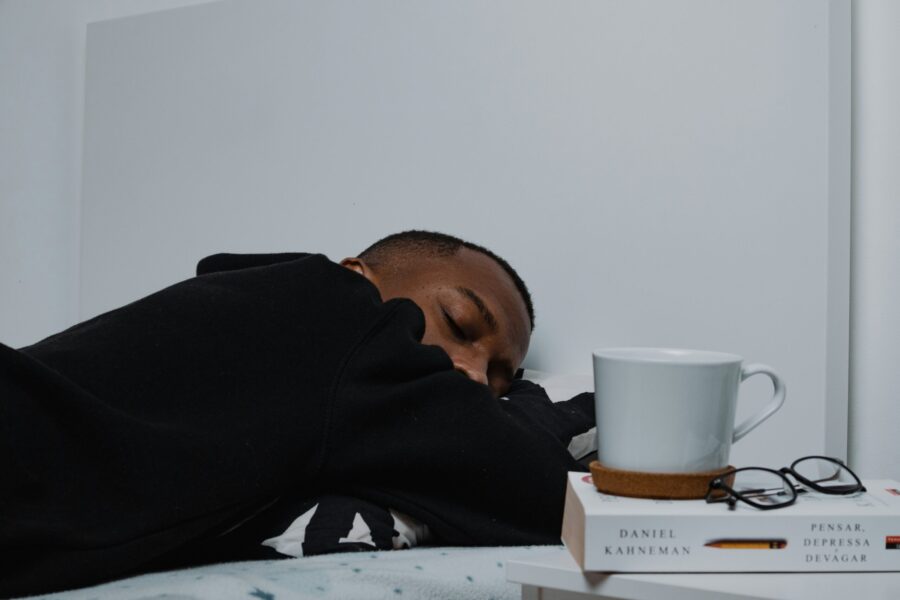
According to the survey, a whopping 29% of the UK’s highest earners are freefall sleepers, lying stomach-down with arms up by their heads.
The soldier position takes second place with 23% of high earners opting for the straight-back, arms-at-your-sides position – often regarded as one of the healthiest positions for your spine.
Interestingly, the fetal position also makes the top three, favoured by 21% of successful professionals, followed by the pillow hugger position (13%).
Inbaal Honigman, body language expert, commented on the disparity shown in sleep positions:
The two most common sleep positions among high earners are far more exposed and unprotected – the freefall position, with limbs sprawled, tummy down and the back fully exposed; and the soldier position, lying flat with arms straight by the sides and tummy up. This tells us that high earners are natural risk-takers, they leap first and ask questions later, while the majority of the population tends to be more cautious. The top earners, quite simply, are made up of more fearless individuals.
Inbaal Honigman, body language expert
The research also uncovered that the highest earners sleep for an average of 6 hours and 58 minutes each night – 22 minutes longer than lower-earning employees, who average just 6 hours and 36 minutes.
When it comes to wake-up time, the average worker rises at 7:06 am on a weekday, while the top 10% of earners are already awake at 6:42 am. In fact, studies have found that early risers are more proactive and better at anticipating problems – proving that the early bird really does catch the worm!
Joanne is the editor for Workplace Wellbeing Professional and has a keen interest in promoting the safety and wellbeing of the global workforce. After earning a bachelor's degree in English literature and media studies, she taught English in China and Vietnam for two years. Before joining Work Well Pro, Joanne worked as a marketing coordinator for luxury property, where her responsibilities included blog writing, photography, and video creation.
- Joanne Swann
- Joanne Swann
- Joanne Swann
- Joanne Swann
- Joanne Swann
- Joanne Swann
- Joanne Swann
- Joanne Swann
- Joanne Swann
- Joanne Swann
- Joanne Swann
- Joanne Swann
- Joanne Swann
- Joanne Swann
- Joanne Swann
- Joanne Swann
- Joanne Swann
- Joanne Swann
- Joanne Swann
- Joanne Swann
- Joanne Swann
- Joanne Swann
- Joanne Swann
- Joanne Swann
- Joanne Swann
- Joanne Swann
- Joanne Swann
- Joanne Swann
- Joanne Swann
- Joanne Swann
- Joanne Swann
- Joanne Swann
- Joanne Swann
- Joanne Swann
- Joanne Swann
- Joanne Swann
- Joanne Swann
- Joanne Swann
- Joanne Swann
- Joanne Swann
- Joanne Swann
- Joanne Swann
- Joanne Swann
- Joanne Swann
- Joanne Swann
- Joanne Swann
- Joanne Swann
- Joanne Swann
- Joanne Swann
- Joanne Swann
- Joanne Swann
- Joanne Swann
- Joanne Swann
- Joanne Swann
- Joanne Swann
- Joanne Swann
- Joanne Swann
- Joanne Swann
- Joanne Swann
- Joanne Swann
- Joanne Swann
- Joanne Swann
- Joanne Swann
- Joanne Swann
- Joanne Swann
- Joanne Swann
- Joanne Swann
- Joanne Swann
- Joanne Swann
- Joanne Swann
- Joanne Swann
- Joanne Swann
- Joanne Swann
- Joanne Swann
- Joanne Swann
- Joanne Swann
- Joanne Swann
- Joanne Swann
- Joanne Swann
- Joanne Swann
- Joanne Swann
- Joanne Swann
- Joanne Swann
- Joanne Swann
- Joanne Swann
- Joanne Swann
- Joanne Swann
- Joanne Swann
- Joanne Swann
- Joanne Swann
- Joanne Swann
- Joanne Swann
- Joanne Swann
- Joanne Swann
- Joanne Swann
- Joanne Swann
- Joanne Swann
- Joanne Swann
- Joanne Swann
- Joanne Swann
- Joanne Swann
- Joanne Swann
- Joanne Swann
- Joanne Swann
- Joanne Swann
- Joanne Swann
- Joanne Swann
- Joanne Swann
- Joanne Swann
- Joanne Swann
- Joanne Swann
- Joanne Swann
- Joanne Swann
- Joanne Swann
- Joanne Swann
- Joanne Swann
- Joanne Swann
- Joanne Swann
- Joanne Swann
- Joanne Swann
- Joanne Swann
- Joanne Swann
- Joanne Swann
- Joanne Swann
- Joanne Swann
- Joanne Swann
- Joanne Swann
- Joanne Swann
- Joanne Swann
- Joanne Swann
- Joanne Swann
- Joanne Swann
- Joanne Swann
- Joanne Swann
- Joanne Swann
- Joanne Swann
- Joanne Swann
- Joanne Swann
- Joanne Swann
- Joanne Swann
- Joanne Swann
- Joanne Swann
- Joanne Swann
- Joanne Swann
- Joanne Swann
- Joanne Swann
- Joanne Swann
- Joanne Swann
- Joanne Swann
- Joanne Swann
- Joanne Swann
- Joanne Swann
- Joanne Swann
- Joanne Swann
- Joanne Swann
- Joanne Swann
- Joanne Swann
- Joanne Swann
- Joanne Swann
- Joanne Swann
- Joanne Swann
- Joanne Swann
- Joanne Swann
- Joanne Swann
- Joanne Swann
- Joanne Swann
- Joanne Swann
- Joanne Swann
- Joanne Swann
- Joanne Swann
- Joanne Swann
- Joanne Swann
- Joanne Swann
- Joanne Swann
- Joanne Swann
- Joanne Swann
- Joanne Swann
- Joanne Swann
- Joanne Swann
- Joanne Swann