

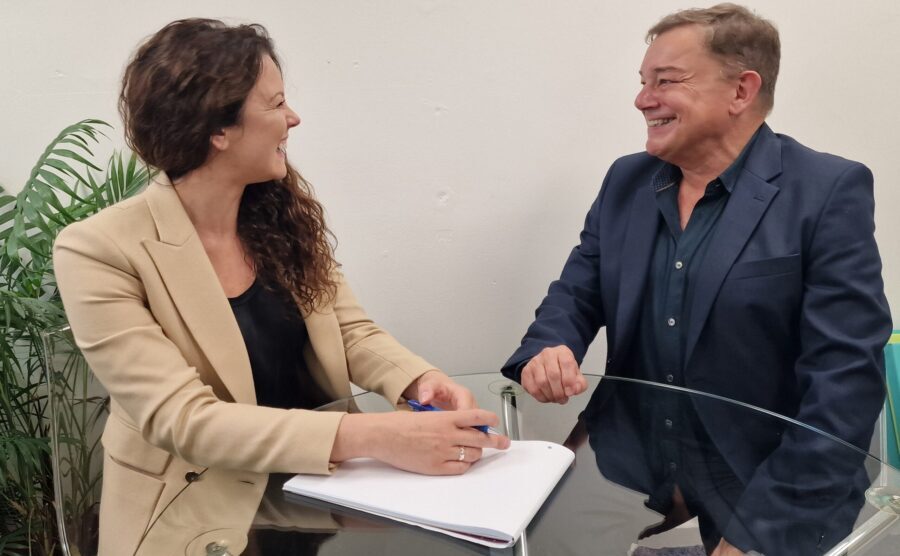
Two of the region’s most esteemed health and wellness experts have joined forces in a bid to support businesses to be the very best that they can be – both in terms of their team’s wellbeing and their bottom line.
Accredited health and wellness coach and founder of the WellBe Hub, Laura Butler, and former Paycare CEO Kevin Rogers, are a dynamic new pairing behind the exciting launch of ‘Orpheus’ – an organisation dedicated to supporting employers to ensure a happy, healthy, and productive workforce.
Employee mental health and wellbeing is a major concern for any forward-thinking business, and with the longstanding effects that Covid has had on mental health – it’s more imperative than ever that employers make it a top priority. According to MetLife’s ‘Employee Benefits Trends Study 2022’, healthy employees are 53% more likely to be productive, 74% more likely to be satisfied in the job they have now, and 51% more likely to intend to be at their organisation in 12 months’ time.
Orpheus Co-Founder Kevin says:
All too often companies proudly display their vision, core values, and Investors in People certificates – promoting the fact that their employees are their biggest asset. But they don’t then lead with these values at their heart. Various wellbeing solutions are offered, all with the best of intentions – but these solutions fail to make the positive impact they should because they simply aren’t focused on the actual needs of the workforce. Business is all about the bottom line, but the bottom line in these scenarios is that teams just don’t feel valued, and the businesses fail to thrive.
Kevin Rogers, Orpheus Co-Founder
Orpheus supports businesses by performing a deep dive into the heart of the organisation to gain access to its epicentre – its reason for being. The team then works to identify and understand what’s really important to the business and to those within it, and works in partnership with its leaders to design a tailor-made wellbeing solution and implementation strategy which truly engages its employees and brings about measurable results.
Laura concluded:
Much the same as any new product requires extensive market research before development can take place, so too does a successful wellbeing strategy. And once you’ve discovered the ideal strategic wellbeing initiative to implement for your business, and for your team, it’s equally imperative that it is backed up with the right company culture to actively encourage your employees to take full advantage of – and to really benefit from – what’s on offer to them. Wellness is no longer just a tick box or buzz word for the progressive organisations – the pandemic has highlighted to businesses that employee wellbeing is actually essential.
Laura Butler, founder of the WellBe Hub

Joanne is the editor for Workplace Wellbeing Professional and has a keen interest in promoting the safety and wellbeing of the global workforce. After earning a bachelor's degree in English literature and media studies, she taught English in China and Vietnam for two years. Before joining Work Well Pro, Joanne worked as a marketing coordinator for luxury property, where her responsibilities included blog writing, photography, and video creation.
- Joanne Swann
- Joanne Swann
- Joanne Swann
- Joanne Swann
- Joanne Swann
- Joanne Swann
- Joanne Swann
- Joanne Swann
- Joanne Swann
- Joanne Swann
- Joanne Swann
- Joanne Swann
- Joanne Swann
- Joanne Swann
- Joanne Swann
- Joanne Swann
- Joanne Swann
- Joanne Swann
- Joanne Swann
- Joanne Swann
- Joanne Swann
- Joanne Swann
- Joanne Swann
- Joanne Swann
- Joanne Swann
- Joanne Swann
- Joanne Swann
- Joanne Swann
- Joanne Swann
- Joanne Swann
- Joanne Swann
- Joanne Swann
- Joanne Swann
- Joanne Swann
- Joanne Swann
- Joanne Swann
- Joanne Swann
- Joanne Swann
- Joanne Swann
- Joanne Swann
- Joanne Swann
- Joanne Swann
- Joanne Swann
- Joanne Swann
- Joanne Swann
- Joanne Swann
- Joanne Swann
- Joanne Swann
- Joanne Swann
- Joanne Swann
- Joanne Swann
- Joanne Swann
- Joanne Swann
- Joanne Swann
- Joanne Swann
- Joanne Swann
- Joanne Swann
- Joanne Swann
- Joanne Swann
- Joanne Swann
- Joanne Swann
- Joanne Swann
- Joanne Swann
- Joanne Swann
- Joanne Swann
- Joanne Swann
- Joanne Swann
- Joanne Swann
- Joanne Swann
- Joanne Swann
- Joanne Swann
- Joanne Swann
- Joanne Swann
- Joanne Swann
- Joanne Swann
- Joanne Swann
- Joanne Swann
- Joanne Swann
- Joanne Swann
- Joanne Swann
- Joanne Swann
- Joanne Swann
- Joanne Swann
- Joanne Swann
- Joanne Swann
- Joanne Swann
- Joanne Swann
- Joanne Swann
- Joanne Swann
- Joanne Swann
- Joanne Swann
- Joanne Swann
- Joanne Swann
- Joanne Swann
- Joanne Swann
- Joanne Swann
- Joanne Swann
- Joanne Swann
- Joanne Swann
- Joanne Swann
- Joanne Swann
- Joanne Swann
- Joanne Swann
- Joanne Swann
- Joanne Swann
- Joanne Swann
- Joanne Swann
- Joanne Swann
- Joanne Swann
- Joanne Swann
- Joanne Swann
- Joanne Swann
- Joanne Swann
- Joanne Swann
- Joanne Swann
- Joanne Swann
- Joanne Swann
- Joanne Swann
- Joanne Swann
- Joanne Swann
- Joanne Swann
- Joanne Swann
- Joanne Swann
- Joanne Swann
- Joanne Swann
- Joanne Swann
- Joanne Swann
- Joanne Swann
- Joanne Swann
- Joanne Swann
- Joanne Swann
- Joanne Swann
- Joanne Swann
- Joanne Swann
- Joanne Swann
- Joanne Swann
- Joanne Swann
- Joanne Swann
- Joanne Swann
- Joanne Swann
- Joanne Swann
- Joanne Swann
- Joanne Swann
- Joanne Swann
- Joanne Swann
- Joanne Swann
- Joanne Swann
- Joanne Swann
- Joanne Swann
- Joanne Swann
- Joanne Swann
- Joanne Swann
- Joanne Swann
- Joanne Swann
- Joanne Swann
- Joanne Swann
- Joanne Swann
- Joanne Swann
- Joanne Swann
- Joanne Swann
- Joanne Swann
- Joanne Swann
- Joanne Swann
- Joanne Swann
- Joanne Swann
- Joanne Swann
- Joanne Swann
- Joanne Swann
- Joanne Swann
- Joanne Swann
- Joanne Swann
- Joanne Swann
- Joanne Swann
- Joanne Swann
- Joanne Swann
- Joanne Swann
- Joanne Swann
- Joanne Swann
- Joanne Swann
- Joanne Swann