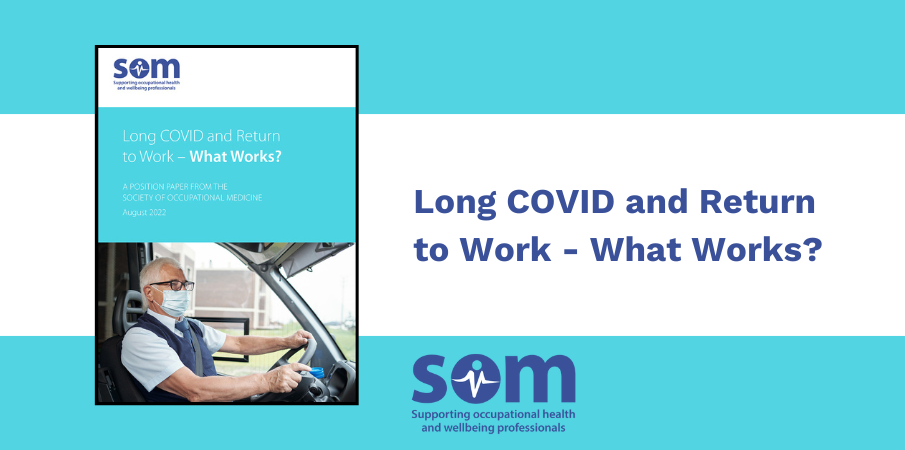
The Society of Occupational Medicine (SOM) is calling for organisations to take a strategic, planned, approach to managing Long COVID in the workforce.
There needs to be early, appropriate intervention, using occupational health input – rather than leave it to individual line managers to decide how to best manage each case.
This SOM guidance assists on identification and management of Long COVID – particularly regarding return to work. It will be of use to occupational health providers, employers, workers, people with Long COVID, HR personnel, managers, medical, allied health professionals and Trades Unions. A multi-disciplinary approach is essential to help retain and support people affected by Long COVID to return to work.
There are useful appendices on:
- Universal first-line screening assessment in Long COVID
- Red flags and specialist referral
- Treatment which can help function and recovery
- Rehabilitation
- Specific Fitness for Work considerations after COVID-19 infection
- Examples of workplace adjustments for Long COVID
- Prevention of infection: risk management in the workplace
- Workplace public health messages
- There are also some excellent case studies.
Download SOM’s new guidance ‘Long COVID and Return to Work – What Works?’ here:
"*" indicates required fields
Source: Society of Occupational Medicine