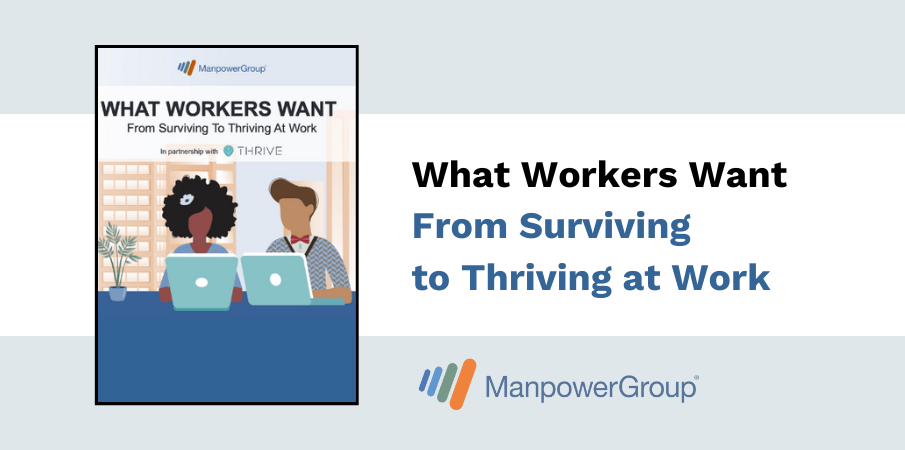
What does it mean to thrive at work? According to today’s workforce, it means being empowered to grow, nurturing mental fitness and physical well-being, finding meaning and purpose in their work, and defining success for themselves.
The world of work has irrevocably changed; the seismic shifts caused by the pandemic have accelerated trends that have been building for some time. Talent is now in extremely short supply, leading to intense competition.
And we don’t see this abating any time soon. Demographic shifts are exacerbating the situation, ensuring that in-demand workers will have the upper hand for the foreseeable future. Fair wages and stability will always be important, but they are increasingly hygiene factors. Workers expect more – from their working lives, and from their employers. Well-being, both emotional and physical, is now firmly front and center when it comes to workers’ priorities.
People don’t just want to survive, they want to thrive – and they are willing to vote with their feet, as evidenced by the great resignations, great reshuffles and great reprioritization of recent months. Employers need to listen, rethink and act to attract and retain talent in the most competitive labor market in living memory.
Complete this form to download the free white paper.
"*" indicates required fields