

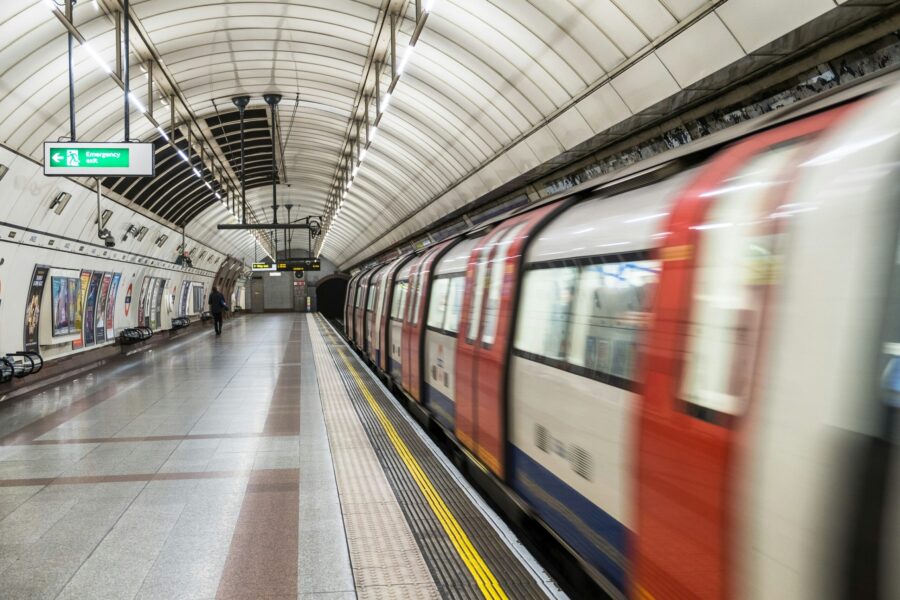
With UK meningitis cases nearly doubling to 396 in the past year, including 33 deaths, public concern about bacteria and viruses is growing.
As TfL reports the Tube now carries 4 million passengers daily and with Victoria line seats containing up to 16,000 colony-forming units of E. coli, shower enclosure specialists Showers to You submitted a Freedom of Information request to Transport for London (TfL) in a bid to uncover which Tube lines are cleaned least frequently and the importance of showering after travelling on public transport to prevent the spread of bacteria.
The least frequently cleaned Tube lines
| Rank | Line | No. of trains
cleaned weekly |
Fleet Size | Bacteria
types found * |
Service days between
cleans (frequency) |
| 1. | Piccadilly | 14 | 86 | 20 | 43 |
| 2. | S-Stock | 10 | 193 | N/A | 28 |
| 3. | Central | 22 | 85 | 16 | 27 |
| 4. | Bakerloo | 10 | 36 | 13 | 25 |
| 5, | Northern | 29 | 106 | 18 | 25 |
| 6. | Jubilee | 24 | 63 | 18 | 18 |
Piccadilly is the least frequently cleaned line
The Piccadilly line is the least frequently cleaned service on the London Underground. With a fleet of 86 trains, the Piccadilly line sees 14 trains cleaned each week, meaning that on average, each train will be cleaned approximately every 43 service days. If operating daily, this results in almost a month and a half between cleans. Given this extended interval, it’s unsurprising that the Piccadilly line ranks among the highest for bacteria levels (20).
Ranking second is the London Underground’s S-Stock, with 28 service days between cleans. If the train is in service each day, this is equivalent to almost a month between cleans. Despite having the largest fleet size at 193 trains, just 10 trains are cleaned per week, meaning it can take close to 4 and a half months for all S-Stock trains to be cleaned.
Following closely in third place is the Central line, with 27 service days between cleans. The Central line is the busiest Tube service with 260.9 million journeys, making it surprising that it’s the third-least frequently cleaned service.3 Despite having a similarly sized fleet to the Piccadilly line with 85 trains, almost double the number of trains are cleaned on the Central line per week (22) than on the Piccadilly line (14).
Darren Smith, spokesperson at shower enclosure retailer Showers to You, shares their expertise on how to bathe effectively to avoid the spread of bacteria on public transport:
- Wash your hands with soap and water for at least 20 seconds as soon as you arrive home. Pay special attention to areas like under the nails and between fingers to ensure all germs are removed.
- Take a shower as soon as possible when returning home after using public transport. This helps remove any bacteria or grime that may have come into contact with your skin and clothing.
- Use an antibacterial soap during your shower to help kill germs and bacteria that you may have picked up from surfaces on public transport.
- Make sure to clean personal items like your phone, bags, and clothing regularly. These items can harbour bacteria and transfer them to your body.
- In addition to regular showers, consider using antibacterial wipes for quick clean-ups when necessary. Keeping up with good personal hygiene practices can help minimise the risk of bacterial infections.

Joanne is the editor for Workplace Wellbeing Professional and has a keen interest in promoting the safety and wellbeing of the global workforce. After earning a bachelor's degree in English literature and media studies, she taught English in China and Vietnam for two years. Before joining Work Well Pro, Joanne worked as a marketing coordinator for luxury property, where her responsibilities included blog writing, photography, and video creation.
- Joanne Swann
- Joanne Swann
- Joanne Swann
- Joanne Swann
- Joanne Swann
- Joanne Swann
- Joanne Swann
- Joanne Swann
- Joanne Swann
- Joanne Swann
- Joanne Swann
- Joanne Swann
- Joanne Swann
- Joanne Swann
- Joanne Swann
- Joanne Swann
- Joanne Swann
- Joanne Swann
- Joanne Swann
- Joanne Swann
- Joanne Swann
- Joanne Swann
- Joanne Swann
- Joanne Swann
- Joanne Swann
- Joanne Swann
- Joanne Swann
- Joanne Swann
- Joanne Swann
- Joanne Swann
- Joanne Swann
- Joanne Swann
- Joanne Swann
- Joanne Swann
- Joanne Swann
- Joanne Swann
- Joanne Swann
- Joanne Swann
- Joanne Swann
- Joanne Swann
- Joanne Swann
- Joanne Swann
- Joanne Swann
- Joanne Swann
- Joanne Swann
- Joanne Swann
- Joanne Swann
- Joanne Swann
- Joanne Swann
- Joanne Swann
- Joanne Swann
- Joanne Swann
- Joanne Swann
- Joanne Swann
- Joanne Swann
- Joanne Swann
- Joanne Swann
- Joanne Swann
- Joanne Swann
- Joanne Swann
- Joanne Swann
- Joanne Swann
- Joanne Swann
- Joanne Swann
- Joanne Swann
- Joanne Swann
- Joanne Swann
- Joanne Swann
- Joanne Swann
- Joanne Swann
- Joanne Swann
- Joanne Swann
- Joanne Swann
- Joanne Swann
- Joanne Swann
- Joanne Swann
- Joanne Swann
- Joanne Swann
- Joanne Swann
- Joanne Swann
- Joanne Swann
- Joanne Swann
- Joanne Swann
- Joanne Swann
- Joanne Swann
- Joanne Swann
- Joanne Swann
- Joanne Swann
- Joanne Swann
- Joanne Swann
- Joanne Swann
- Joanne Swann
- Joanne Swann
- Joanne Swann
- Joanne Swann
- Joanne Swann
- Joanne Swann
- Joanne Swann
- Joanne Swann
- Joanne Swann
- Joanne Swann
- Joanne Swann
- Joanne Swann
- Joanne Swann
- Joanne Swann
- Joanne Swann
- Joanne Swann
- Joanne Swann
- Joanne Swann
- Joanne Swann
- Joanne Swann
- Joanne Swann
- Joanne Swann
- Joanne Swann
- Joanne Swann
- Joanne Swann
- Joanne Swann
- Joanne Swann
- Joanne Swann
- Joanne Swann
- Joanne Swann
- Joanne Swann
- Joanne Swann
- Joanne Swann
- Joanne Swann
- Joanne Swann
- Joanne Swann
- Joanne Swann
- Joanne Swann
- Joanne Swann
- Joanne Swann
- Joanne Swann
- Joanne Swann
- Joanne Swann
- Joanne Swann
- Joanne Swann
- Joanne Swann
- Joanne Swann
- Joanne Swann
- Joanne Swann
- Joanne Swann
- Joanne Swann
- Joanne Swann
- Joanne Swann
- Joanne Swann
- Joanne Swann
- Joanne Swann
- Joanne Swann
- Joanne Swann
- Joanne Swann
- Joanne Swann
- Joanne Swann
- Joanne Swann
- Joanne Swann
- Joanne Swann
- Joanne Swann
- Joanne Swann
- Joanne Swann
- Joanne Swann
- Joanne Swann
- Joanne Swann
- Joanne Swann
- Joanne Swann
- Joanne Swann
- Joanne Swann
- Joanne Swann
- Joanne Swann
- Joanne Swann
- Joanne Swann
- Joanne Swann
- Joanne Swann
- Joanne Swann
- Joanne Swann
- Joanne Swann
- Joanne Swann
- Joanne Swann
- Joanne Swann
- Joanne Swann
- Joanne Swann
- Joanne Swann