

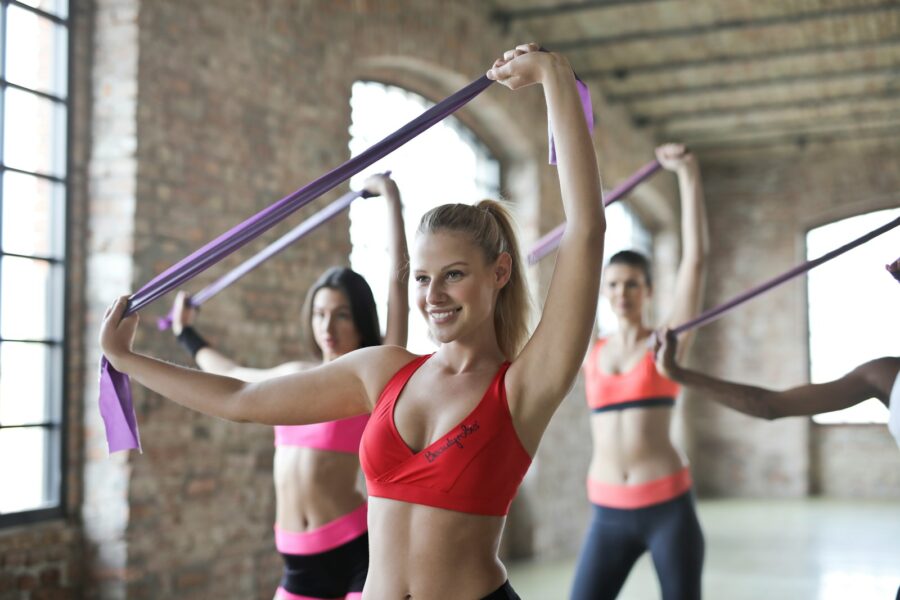
A leading UK back specialist is urging people aged 40 and above to incorporate at least 90 minutes of resistance-based exercises, using weights or bands, into their weekly fitness regimes to help prevent back pain in later life.
Michael Fatica, lead consultant and founder of the online back rehabilitation program, Back In Shape, says back pain in our advancing years can be significantly mitigated, and even prevented, with a focus on strengthening three core muscle groups – the back, core, and legs.
Michael Fatica, founder of Back In Shape, comments:
Muscle loss and bone degeneration are inevitable aspects of ageing, especially when coupled with a sedentary lifestyle. Addressing these factors is crucial for stabilising and supporting the spine and preventing injury, and a simple daily routine of resistance exercises can dramatically slow down or even reverse this process.
Michael Fatica, founder of Back In Shape
He further explains that strong back and glute muscles support the vertebrae and stabilise the spinal joints, while strong abdominal muscles help maintain correct posture and a neutral pelvic alignment. Weakness in any or all of these areas can result in back pain.
Fatica urges individuals in their 40’s and above to focus on resistance-based exercises, which are key to strengthening muscles, building resilience, and increasing the body’s ability to heal from back pain or injury.
Recent studies from 2022-23 reveal that back and neck pain affects more than 2.9 million people in the UK, an increase from 2.6 million in 2019.[i] Lower back pain is a major health concern among older adults aged 60 years or older.
While studies show the majority of adults experience degeneration by the age of 60, consultations for back pain peak in the 40s.[ii] For women in particular, the likelihood of developing back pain from this period onwards can be exacerbated by the peri/menopause – as reduced oestrogen levels directly impact bone health, osteoporosis and, in some cases, the repercussions of past pregnancies.
Michael recommends incorporating the following resistance-based exercises into daily fitness regimes:
The Squat – 10 repetitions total, repeat 3 times at your own pace
- Stand with your feet shoulder-width apart
- Your feet should be facing forwards or slightly outwards
- Bend your knees and push the hips back and keep your back straight
- Picture yourself sitting on a chair
- Then drive through your feet & slowly return to the starting position
The Reverse Lunge – 10 repetitions total, repeat 3 times at your own pace
- Start with the front foot standing on the band, engaging your core and back muscles for stability
- Step the other leg backwards, bending the knee
- Hover the knee off the floor as low as is comfortable
- The front knee should bend to around 90 degrees
- Push back up to starting position and then repeat
The Hip Hinge – 10 repetitions total, repeat 3 times at your own pace
- Start with your feet shoulder width apart with good posture and slightly bent knees.
- At the hips slowly lower your torso like a drawbridge without bending your knees.
- Lower until you feel the back of your thighs stop you from going further.
- Then return to the starting position
Top tips for increasing muscle bulk:
- Don’t scrimp on protein! Ensuring adequate quantity and quality of daily protein is key.
- Refrain from treating exercises as a choreographed routine. They should be performed at the right intensity to ensure an appropriately demanding workout.
- Value rest and recovery. Ensure sufficient quantity and quality of consistent sleep as this helps with the adaptive process that takes place in response to your training.
References
[i] Office for National Statistics
[ii] Croft et al 1998

Joanne is the editor for Workplace Wellbeing Professional and has a keen interest in promoting the safety and wellbeing of the global workforce. After earning a bachelor's degree in English literature and media studies, she taught English in China and Vietnam for two years. Before joining Work Well Pro, Joanne worked as a marketing coordinator for luxury property, where her responsibilities included blog writing, photography, and video creation.
- Joanne Swann
- Joanne Swann
- Joanne Swann
- Joanne Swann
- Joanne Swann
- Joanne Swann
- Joanne Swann
- Joanne Swann
- Joanne Swann
- Joanne Swann
- Joanne Swann
- Joanne Swann
- Joanne Swann
- Joanne Swann
- Joanne Swann
- Joanne Swann
- Joanne Swann
- Joanne Swann
- Joanne Swann
- Joanne Swann
- Joanne Swann
- Joanne Swann
- Joanne Swann
- Joanne Swann
- Joanne Swann
- Joanne Swann
- Joanne Swann
- Joanne Swann
- Joanne Swann
- Joanne Swann
- Joanne Swann
- Joanne Swann
- Joanne Swann
- Joanne Swann
- Joanne Swann
- Joanne Swann
- Joanne Swann
- Joanne Swann
- Joanne Swann
- Joanne Swann
- Joanne Swann
- Joanne Swann
- Joanne Swann
- Joanne Swann
- Joanne Swann
- Joanne Swann
- Joanne Swann
- Joanne Swann
- Joanne Swann
- Joanne Swann
- Joanne Swann
- Joanne Swann
- Joanne Swann
- Joanne Swann
- Joanne Swann
- Joanne Swann
- Joanne Swann
- Joanne Swann
- Joanne Swann
- Joanne Swann
- Joanne Swann
- Joanne Swann
- Joanne Swann
- Joanne Swann
- Joanne Swann
- Joanne Swann
- Joanne Swann
- Joanne Swann
- Joanne Swann
- Joanne Swann
- Joanne Swann
- Joanne Swann
- Joanne Swann
- Joanne Swann
- Joanne Swann
- Joanne Swann
- Joanne Swann
- Joanne Swann
- Joanne Swann
- Joanne Swann
- Joanne Swann
- Joanne Swann
- Joanne Swann
- Joanne Swann
- Joanne Swann
- Joanne Swann
- Joanne Swann
- Joanne Swann
- Joanne Swann
- Joanne Swann
- Joanne Swann
- Joanne Swann
- Joanne Swann
- Joanne Swann
- Joanne Swann
- Joanne Swann
- Joanne Swann
- Joanne Swann
- Joanne Swann
- Joanne Swann
- Joanne Swann
- Joanne Swann
- Joanne Swann
- Joanne Swann
- Joanne Swann
- Joanne Swann
- Joanne Swann
- Joanne Swann
- Joanne Swann
- Joanne Swann
- Joanne Swann
- Joanne Swann
- Joanne Swann
- Joanne Swann
- Joanne Swann
- Joanne Swann
- Joanne Swann
- Joanne Swann
- Joanne Swann
- Joanne Swann
- Joanne Swann
- Joanne Swann
- Joanne Swann
- Joanne Swann
- Joanne Swann
- Joanne Swann
- Joanne Swann
- Joanne Swann
- Joanne Swann
- Joanne Swann
- Joanne Swann
- Joanne Swann
- Joanne Swann
- Joanne Swann
- Joanne Swann
- Joanne Swann
- Joanne Swann
- Joanne Swann
- Joanne Swann
- Joanne Swann
- Joanne Swann
- Joanne Swann
- Joanne Swann
- Joanne Swann
- Joanne Swann
- Joanne Swann
- Joanne Swann
- Joanne Swann
- Joanne Swann
- Joanne Swann
- Joanne Swann
- Joanne Swann
- Joanne Swann
- Joanne Swann
- Joanne Swann
- Joanne Swann
- Joanne Swann
- Joanne Swann
- Joanne Swann
- Joanne Swann
- Joanne Swann
- Joanne Swann
- Joanne Swann
- Joanne Swann
- Joanne Swann
- Joanne Swann
- Joanne Swann
- Joanne Swann
- Joanne Swann
- Joanne Swann
- Joanne Swann
- Joanne Swann
- Joanne Swann
- Joanne Swann
- Joanne Swann
- Joanne Swann
- Joanne Swann
- Joanne Swann
- Joanne Swann
- Joanne Swann