

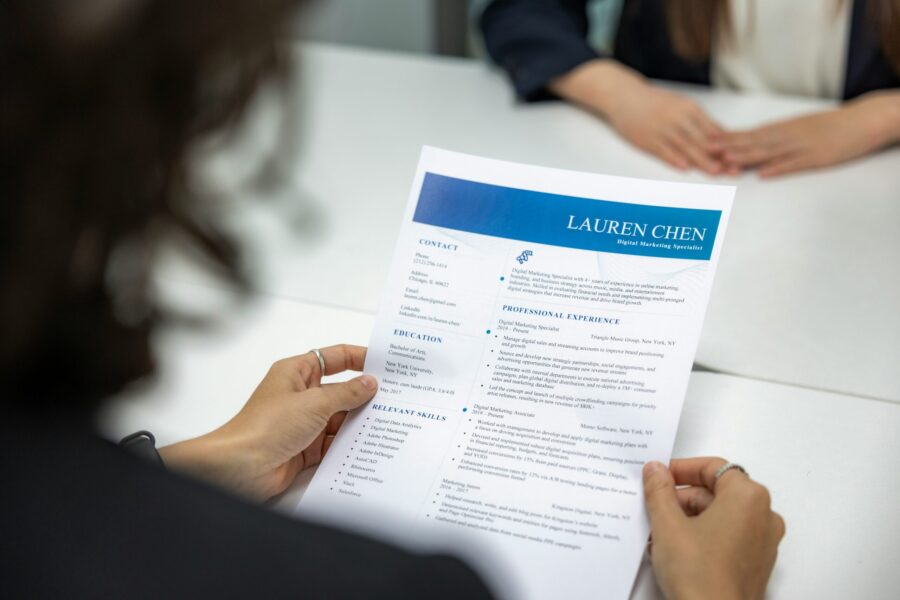
A new study has revealed the most common and overused words on London CVs, with ‘skilled’ coming top, which features more than 199,000 times.
QR Code Generator compiled a list of 50 commonly used words and phrases on CVs, and then ran each of these through Indeed’s Resume Search, to find which featured the most across CVs updated in the past 6 months.
Most frequently used words on British CVs
‘Skilled’ was found to be the most frequently used word, featuring in 199,035 CVs updated over the last six months. It has a significantly high usage rate, appearing more frequently than any other word on the list, while also being the most-used word on CVs in 72 UK cities.
The second most-common word was found to be ‘organised’ which featured in 107,697 CVs. A crucial skill employers seek in today’s dynamic job market, which reflects the need for individuals who can manage workload, deadlines, and resources effectively.
Closely following in third is ‘responsible’ which featured in 101,391 CVs. Being responsible in a workplace helps to build trust with colleagues, and highlights growth potential in your role.
‘Trained’ placed fourth being used 95,912 times. Being trained means that you understand your role and are able to handle the challenges that may arise. It can also be attractive to an employer if the jobseeker mentions that they have ‘trained’ other members of a team, as this demonstrates leadership and responsibility in their role.
‘Informed’ ranks fifth, featuring on 73,542 CVs. Incorporating “informed” into your CV emphasises that you are a knowledgeable and resourceful candidate, making you an asset to employers seeking individuals who can contribute insightfully to their teams.
Most frequently misspelt words on British CVs
As well as looking at which words are the most overused in London, the analysis also looked at the most misspelt words on British CVs.
‘Confident’ was the most commonly misspelt word, which was found to be spelt as ‘Confidant’ on 728,561 CVs within the past 6 months, with a number of jobseekers incorrectly using an ‘a’ rather than an ‘e’. While ‘confidant’ is an actual word, it is likely that it has been used incorrectly in the context of a CV.
The second most misspelt word was ‘independent’, with 624,622 CVs using an ‘a’ rather than an ‘e’, spelling it as ‘independant’ instead.
Following in third, was ‘refered’ rather than ‘referred’ which cropped up in 171,927 CVs and missed the second ‘r’ from the word.
In fourth was the misspelling of ‘preferred’ as ‘prefered’ which misses out the double ‘r’ and featured in 112,062 CVs.
The fifth most misspelt was the word ‘definitely’, where people often confused their vowels instead spelling it as ‘definitaly’ in 70,196 CVs.
Marc Porcar, CEO of QR Code Generator, commented:
Job seekers should focus on providing concrete examples that illustrate their strengths, rather than simply listing traits like ‘skilled’ or ‘responsible.’ By doing this, you demonstrate to potential employers that you can substantiate these qualities with real experiences, setting yourself apart from candidates who may rely on generic descriptors.
Marc Porcar, CEO of QR Code Generator

Joanne is the editor for Workplace Wellbeing Professional and has a keen interest in promoting the safety and wellbeing of the global workforce. After earning a bachelor's degree in English literature and media studies, she taught English in China and Vietnam for two years. Before joining Work Well Pro, Joanne worked as a marketing coordinator for luxury property, where her responsibilities included blog writing, photography, and video creation.
- Joanne Swann
- Joanne Swann
- Joanne Swann
- Joanne Swann
- Joanne Swann
- Joanne Swann
- Joanne Swann
- Joanne Swann
- Joanne Swann
- Joanne Swann
- Joanne Swann
- Joanne Swann
- Joanne Swann
- Joanne Swann
- Joanne Swann
- Joanne Swann
- Joanne Swann
- Joanne Swann
- Joanne Swann
- Joanne Swann
- Joanne Swann
- Joanne Swann
- Joanne Swann
- Joanne Swann
- Joanne Swann
- Joanne Swann
- Joanne Swann
- Joanne Swann
- Joanne Swann
- Joanne Swann
- Joanne Swann
- Joanne Swann
- Joanne Swann
- Joanne Swann
- Joanne Swann
- Joanne Swann
- Joanne Swann
- Joanne Swann
- Joanne Swann
- Joanne Swann
- Joanne Swann
- Joanne Swann
- Joanne Swann
- Joanne Swann
- Joanne Swann
- Joanne Swann
- Joanne Swann
- Joanne Swann
- Joanne Swann
- Joanne Swann
- Joanne Swann
- Joanne Swann
- Joanne Swann
- Joanne Swann
- Joanne Swann
- Joanne Swann
- Joanne Swann
- Joanne Swann
- Joanne Swann
- Joanne Swann
- Joanne Swann
- Joanne Swann
- Joanne Swann
- Joanne Swann
- Joanne Swann
- Joanne Swann
- Joanne Swann
- Joanne Swann
- Joanne Swann
- Joanne Swann
- Joanne Swann
- Joanne Swann
- Joanne Swann
- Joanne Swann
- Joanne Swann
- Joanne Swann
- Joanne Swann
- Joanne Swann
- Joanne Swann
- Joanne Swann
- Joanne Swann
- Joanne Swann
- Joanne Swann
- Joanne Swann
- Joanne Swann
- Joanne Swann
- Joanne Swann
- Joanne Swann
- Joanne Swann
- Joanne Swann
- Joanne Swann
- Joanne Swann
- Joanne Swann
- Joanne Swann
- Joanne Swann
- Joanne Swann
- Joanne Swann
- Joanne Swann
- Joanne Swann
- Joanne Swann
- Joanne Swann
- Joanne Swann
- Joanne Swann
- Joanne Swann
- Joanne Swann
- Joanne Swann
- Joanne Swann
- Joanne Swann
- Joanne Swann
- Joanne Swann
- Joanne Swann
- Joanne Swann
- Joanne Swann
- Joanne Swann
- Joanne Swann
- Joanne Swann
- Joanne Swann
- Joanne Swann
- Joanne Swann
- Joanne Swann
- Joanne Swann
- Joanne Swann
- Joanne Swann
- Joanne Swann
- Joanne Swann
- Joanne Swann
- Joanne Swann
- Joanne Swann
- Joanne Swann
- Joanne Swann
- Joanne Swann
- Joanne Swann
- Joanne Swann
- Joanne Swann
- Joanne Swann
- Joanne Swann
- Joanne Swann
- Joanne Swann
- Joanne Swann
- Joanne Swann
- Joanne Swann
- Joanne Swann
- Joanne Swann
- Joanne Swann
- Joanne Swann
- Joanne Swann
- Joanne Swann
- Joanne Swann
- Joanne Swann
- Joanne Swann
- Joanne Swann
- Joanne Swann
- Joanne Swann
- Joanne Swann
- Joanne Swann
- Joanne Swann
- Joanne Swann
- Joanne Swann
- Joanne Swann
- Joanne Swann
- Joanne Swann
- Joanne Swann
- Joanne Swann
- Joanne Swann
- Joanne Swann
- Joanne Swann
- Joanne Swann
- Joanne Swann
- Joanne Swann
- Joanne Swann
- Joanne Swann
- Joanne Swann
- Joanne Swann
- Joanne Swann
- Joanne Swann
- Joanne Swann
- Joanne Swann
- Joanne Swann
- Joanne Swann
- Joanne Swann